
Latest updates
TRIP report analyzes causes of traffic fatality spike and solutions
Traffic fatalities in the U.S. rose 19% from 2019-2021, far surpassing U.S. vehicle travel for that period, according to a report released this morning by TRIP, a national transportation research nonprofit. The report, “Addressing America’s Traffic Safety Crisis: Examining the Causes of Increasing U.S. Traffic Fatalities and Identifying Solutions to Improve Road User Safety,” takes a closer look at data from the past two years. “America faces a roadway safety crisis, with motorists, pedestrians and bicyclists fatalities in 2021 reaching their highest level in nearly two decades. The tremendous toll of fatalities and serious injuries that occur on the nation’s roadways are a significant economic and, more critically, personal burden on Americans,” the report notes in its conclusion. “The causes of the recent surge in traffic fatalities in the U.S. appear largely to be the result of the public taking greater risks on the nation’s roadways, including speeding, impaired driving and reduced safety belt use.” Traffic fatalities in the U.S. rose 19% from 2019-2021, far surpassing U.S. vehicle travel for that period, according to a report released this morning by TRIP, a national transportation research nonprofit. The report, “Addressing America’s Traffic Safety Crisis: Examining the Causes of Increasing U.S. Traffic Fatalities and Identifying Solutions to Improve Road User Safety,” takes a closer look at data from the past two years. “America faces a roadway safety crisis, with motorists, pedestrians and bicyclists fatalities in 2021 reaching their highest level in nearly two decades. The tremendous toll of fatalities and serious injuries that occur on the nation’s roadways are a significant economic and, more critically, personal burden on Americans,” the report notes in its conclusion. “The causes of the recent surge in traffic fatalities in the U.S. appear largely to be the result of the public taking greater risks on the nation’s roadways, including speeding, impaired driving and reduced safety belt use.” The report notes, as previous reports have, that fatalities increased significantly in 2020 though vehicle travel declined dramatically as a result of people working from home and school closures that started in spring due to efforts to curtail the spread of COVID-19. Its report analyzes data from 2019, which was pre-pandemic, through 2021, when vehicle travel was returning to normal. Traffic fatalities increased 8% from 2019-2020 despite the drop in travel, and rose approximately 11% from 2020-2021, the highest increase since 2005, according to the report. Both the National Highway Traffic Safety Administration NHTSA, in an October 2021 report, and the AAA Foundation for Traffic Safety AAAFTS concluded the increase in traffic fatalities was related to increased risks taken by drivers starting during the pandemic. TRIP noted in a statement this morning that a 2017 report by AAAFTS indicated the U.S. had a $146 billion backlog in needed roadway safety improvements and that “increasing investment in roadway safety improvements is likely to pay off in the form of reduced fatal and serious traffic crashes.” The Infrastructure Investment & Jobs Act IIJA passed in November, offers funding that can significantly address roadway safety, including $6 billion for the Safe Streets and Roads for All program, $17 billion for the Highway Safety Improvement Program HSIP, $4 billion for improved crash data and vehicle, behavior and truck safety programs, $300 million for rural road safety, and $120 million for tribal road safety. ATSSA recognizes the significant opportunity IIJA offers for addressing roadway safety and the importance of collaboration with partners in the transportation industry. “A driver’s human mistake should not result in a life lost – we must recommit to building roads that protect roadway users and workers alike,” ATSSA Board Chair Jeff Johnson said. “The safety investments made in the IIJA give state and local governments the funding tools necessary for significant progress to be made on roadway safety infrastructure projects. Now stakeholders must work together to effectively, efficiently and swiftly deploy these lifesaving, cost-effective countermeasures to break the increasing trend of traffic fatalities. “As ATSSA Board of Directors member Cindy Williams testified before the Highways and Transit Subcommittee in Congress in early June, collaboration is critical to moving our nation Toward Zero Deaths on U.S. roadways.” TRIP Executive Director Dave Kearby echoed the importance of collaboration in this morning’s release. “Making a commitment to eliminating fatal and serious injuries on the nation’s roadways will require robust investment and coordinated activities by transportation and safety-related agencies in providing the needed layers of protection for the nation’s motorists, pedestrians and bicyclists, including safe road users, safe roads, safe vehicles, safe speeds and high-quality post-crash care,” Kearby said.
ATSSA strongly opposes President Biden’s gas tax suspension proposal
ATSSA President and CEO, Stacy Tetschner released the following statement today that strongly opposes President Joe Biden’s proposal for suspending federal and state gas taxes. "Although we certainly support efforts to reduce the price per gallon of gasoline and diesel, suspending federal fuel taxes would set a dangerous precedent, financially undermine the recently-enacted bipartisan infrastructure law, impact state and local governments’ certainty of federal roadway safety funding, and imperil the ability to enact future multi-year transportation authorizations. It’s extremely unlikely that the suspension of federal fuel taxes will result in the American consumer actually seeing a commensurate reduction in the price they pay at the pump when filling up their vehicle. ATSSA President and CEO, Stacy Tetschner released the following statement today that strongly opposes President Joe Biden’s proposal for suspending federal and state gas taxes. "Although we certainly support efforts to reduce the price per gallon of gasoline and diesel, suspending federal fuel taxes would set a dangerous precedent, financially undermine the recently-enacted bipartisan infrastructure law, impact state and local governments’ certainty of federal roadway safety funding, and imperil the ability to enact future multi-year transportation authorizations. It’s extremely unlikely that the suspension of federal fuel taxes will result in the American consumer actually seeing a commensurate reduction in the price they pay at the pump when filling up their vehicle. In addition, once the 90-day suspension of the federal fuel taxes is over and the taxes are reinstated, prices will have to increase – making any reinstatement of the tax politically difficult. Federal fuel taxes generate much-needed revenue for the Highway Trust Fund, which helps pay for critical and life-saving roadway safety improvements that ATSSA members manufacture and install. At a time when serious injuries and fatalities are on the rise across this country, now is not the time to make it more difficult to make these important safety investments." Cutting the gas tax is a COST we can't afford. Learn more now.
VDOT starts variable speed limits on northbound I-95
The Virginia Department of Transportation VDOT takes the first step in activating its variable speed zone along Interstate 95 in the Fredericksburg region today. New LED signs that can display variable speed limits will be illuminated for the first several days with the 65-70 mph limit to give drivers time to adjust to the presence of the signs, VDOT announced. The system will be fully activated on June 22, at which point speed limits could be anywhere between 35 mph and 70 mph. ATSSA examined variable speed zones in the Winter 2022 issue of Roadway Safety magazine in an article that analyzed their use in multiple states. The article, “Do They Improve Safety?” reviewed details of how the new VDOT variable speed zone will work and how the zones have been used elsewhere in Virginia and in regions across the country. The Virginia Department of Transportation VDOT takes the first step in activating its variable speed zone along Interstate 95 in the Fredericksburg region today. New LED signs that can display variable speed limits will be illuminated for the first several days with the 65-70 mph limit to give drivers time to adjust to the presence of the signs, VDOT announced. The system will be fully activated on June 22, at which point speed limits could be anywhere between 35 mph and 70 mph. The variable speed zone will operate in a 15-mile stretch of northbound I-95 between Exit 110 Ladysmith and Exit 130 Route 3/Fredericksburg, specifically from mile markers 115 to 130. Speed limits will change based on real-time conditions to help vehicles move more efficiently and safely in an area where frequent traffic tie-ups occur. ATSSA examined variable speed zones in the Winter 2022 issue of Roadway Safety magazine in an article that analyzed their use in multiple states. The article, “Do They Improve Safety?” reviewed details of how the new VDOT variable speed zone will work and how the zones have been used elsewhere in Virginia and in regions across the country. The article included the following graphic that explains how the process works in the northbound I-95 project. The new variable speed zone is a $10 million project funded through the I-95 Corridor Improvement Program and the Innovation and Technology Transportation Fund ITTF. VDOT is attempting to reduce traffic problems by having drivers adjust their speed based on real-time traffic conditions as well as delays occurring further north in that stretch of the heavily traveled interstate. “When we studied the I-95 corridor to identify areas for operational improvements, we found recurring congestion was contributing to crashes and driver delay at this location, especially on weekends and during holidays,” Mena Lockwood, VDOT assistant state traffic engineer, said in a news release about this week’s changes. “Northbound motorists approaching this area are often surprised by a sudden slowdown in traffic, and brake sharply,” Lockwood said. “By installing this variable speed limit system here, we can lower vehicle speeds before travelers reach the point of congestion. This reduces the risk of crashes and resulting injuries, and it maximizes our ability to keep traffic moving.” Additional details on the I-95 rollout of the variable speed zone from VDOT: Flashing beacons attached to the signs will be activated when speed limits are reduced below the maximum limit. Additional static signs posted on I-95 northbound before mile marker 115 will notify drivers they are entering a variable speed limit corridor. Message boards controlled by operators in VDOT’s Traffic Operations Centers will communicate the reason why speed limits are being lowered, such as congestion ahead, weather conditions, or lane closures for crashes, work zones or other incidents. Six new 511Virginia traffic cameras will be installed in the corridor by summer 2022 as part of this project, which will assist with traffic monitoring. Speed limits will be reduced by only 10 mph at a time, and will hold at that speed for at least a minute so drivers can reduce speed at a comfortable rate. When congestion clears, the speed limits will go up directly to the maximum allowable speed limit. Variable speed limits posted on the LED signs are enforceable, just as with any other posted speed limit sign. VDOT also explained how the system works: Vehicle detectors installed along I-95 use radar to collect traffic speed and volume data, which is fed into a software program. The program uses an algorithm to recognize when speed limits should be lowered, such as when traffic volumes are heavy and speeds are high. The program then assigns incrementally lower speeds to harmonize traffic flow and reduce the risk of crashes and congestion. Vehicle detectors do not identify individual vehicles or gather license plate information. Detection equipment has been operational in the I-95 northbound project corridor since fall 2021. This has allowed the project team to perform advanced system testing and study how seasonal travel patterns and inclement weather affects vehicle speed and congestion. Backup power will operate the variable speed limit signs and system for up to 24 hours in the event of power loss, and dual signs have been installed at each location to provide redundancy. If a system component experiences a failure, VDOT's on-call maintenance contractor is required to schedule a repair within 8 hours. VDOT already uses variable speed limits on Interstate 77 at Fancy Gap in Carroll County, as well as on the approaches and in the Hampton Roads Bridge-Tunnel and on the Monitor-Merrimac Memorial Bridge-Tunnel.
Upcoming Events
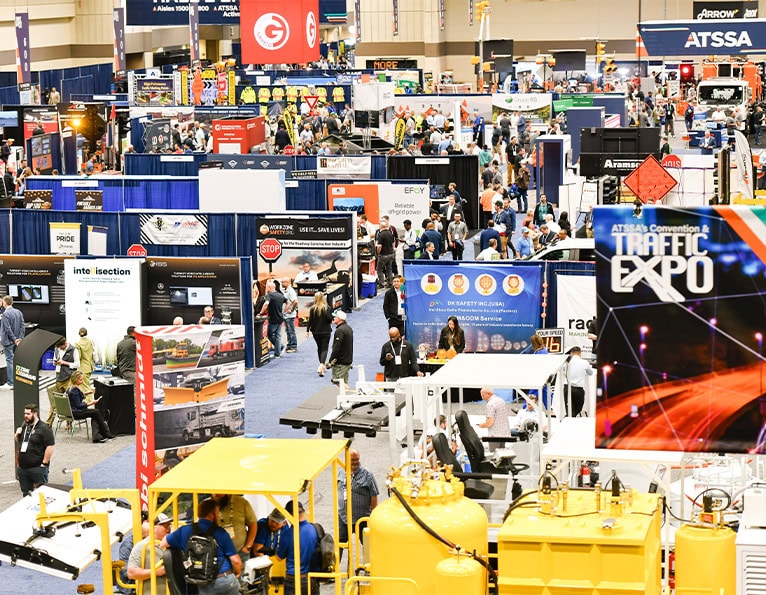
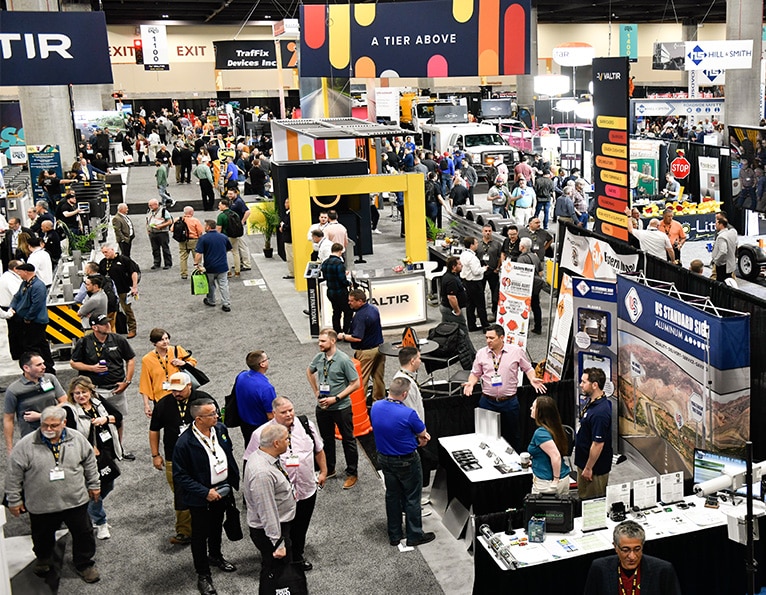
2026 Convention & Traffic Expo
Where Roadway Safety + Innovation Intersect. ATSSA’s 56th Annual Convention & Traffic Expo is Feb. 20-24, 2026, in Houston, Texas. Join key roadway safety and transportation professionals at this premier event.

Legislative Briefing & Fly-In 2026
ATSSA’s 2026 Legislative Briefing & Fly-In is April 14-15, in Washington, D.C.
TOOLS & RESOURCES
Easily find content, tools or products in the Resource Library. Search industry, legal and volunteer resources; products, toolkits and publications for industry professionals, past webinars and more. Get the ATSSA Worker Protection Toolkit for resources on incident response and prevention.
ATSSA Community
As a member of ATSSA, you become part of a vibrant community made up of thousands of roadway safety infrastructure professionals. Explore ways of connecting with your professional community through chapters and volunteer leadership and access quick links to the most popular member resources.
Innovation and Technical Services
ATSSA is dedicated to being a reliable and accurate source of innovative technology information for all members. As the industry moves towards an automated and more technologically advanced future, prepare and learn from best practices and resources related to traffic safety topics and technical services.
National Work Zone Awareness Week
Show your support of work zone safety awareness by participating in NWZAW 2026, April 20-24, with ATSSA and host Connecticut Department of Transportation (CTDOT).
ATSSA's Core purpose is to advance roadway safety
ATSSA members embrace the goal of eliminating roadway fatalities through the design, manufacture and installation of road safety and traffic control devices. For more than 50 years, ATSSA’s training has been recognized as the highest quality roadway safety training program available. Get top training for your team.